[Spoiler Free]
It’s 8pm on a Tuesday evening and I’m sat on my bed, remote in hand, and steaming hot ramen on the little bed-tabletop-thingy on my lap (yes, I now eat in bed, I no longer own a couch. It’s a long story, mind your business). I’m doing that little dance we all do; the one where our meal grows cold while we scroll back and forth endlessly across our streaming service (or services) of choice as we somehow can’t seem to find something to watch amongst the almost quite literally endless options. Or if you’re like me, you entirely finish your meal while finding something to watch…while you eat your meal.
On this particular day, my hunt takes me to Disney+, one of the seemingly thousands of streaming services I pay for but ultimately never use enough and feel guilty for the fact but never cancel because: just in case. I’m actively deciding, as I scroll, what I’m in the mood for. Rewatch of a comfort classic: Hercules? A hit of nostalgia: Wizards of Waverly Place? Or maybe finally catch up on Loki? I initially scrolled right past Iwájú. I read the title, made no attempt to register it, moved on, and then did a double-take. After the initial surprise, I read the little blurb and my decision was made; this was it for the night.
The first scene started out with a background track of JO by Teni (great song) which got the Nigerian juices flowing, got me excited. But ultimately, the Afrobeats cameos started and ended there, which I’m honestly glad for. Pretty much all of the music for Iwájú (apart from this one beginning scene) were original scores composed by Ré Olunuga and they were all very well done.
Anyway, so I binged the show in one sitting, followed immediately by Iwájú: A Day Ahead, the documentary about the making of the show by the founders of Kugali Media in conjunction with Disney. To cut this very long preamble short and to expel all suspense, yes I enjoyed both. Let’s get into it.

The Story
I’m going to keep this part short as I think there’s some value in watching it for yourself with minimal context. But basically, Iwájú follows a little ten-year-old girl in a futuristic Lagos, Nigeria. I’ll let her introduce herself.
“Iwájú: Episode 1, Disney+ (2024)”
Tola has grown up sheltered on Lagos Island–the more affluent part of Lagos–to an overprotective father. The story follows her in her quest to find out more about the world outside the locked gates she lives behind. With the help of her friend, Kole, her curiosity takes her on an adventure to a place on the mainland called Ajegunle, where her father is from and where interesting things ensue.
The show explores a number of things, one of them being quite dark–kidnapping. It’s an interesting choice for a kids show but I admire the decision not to talk down to children. Kidnapping is a big problem in Nigeria. I grew up with a very protective mother (my father was less-but-still-relatively so) whose constant anxiety about our safety I understood on a surface level but did not register to me quite as deeply until I got a bit older. There were moments that I didn’t particularly enjoy the way Tola was written to respond to what was happening around her but I think there is enough balance for both adults and children to get what each needs out of the show. I expect that there will be meaningful conversations had between parents and their kids after watching Iwájú.
I like how the sci-fi elements of the show never took away from the core of the story. It all fit so well that there were times when I genuinely forgot that the futuristic aspects were a novelty and not something that I’ve always been familiar with. It couldn’t have been an easy task to seamlessly transpose cultural elements of today into an imagined future. I was impressed.
In regards to the story itself, I initially feared that the strength and depth might fall short in the strive for accuracy + imagination but I was pleasantly surprised at how sophisticated of a tale it was telling in a relatively digestible (yet not condescending) way for children.

The Characters
There are 4 main characters in Iwájú
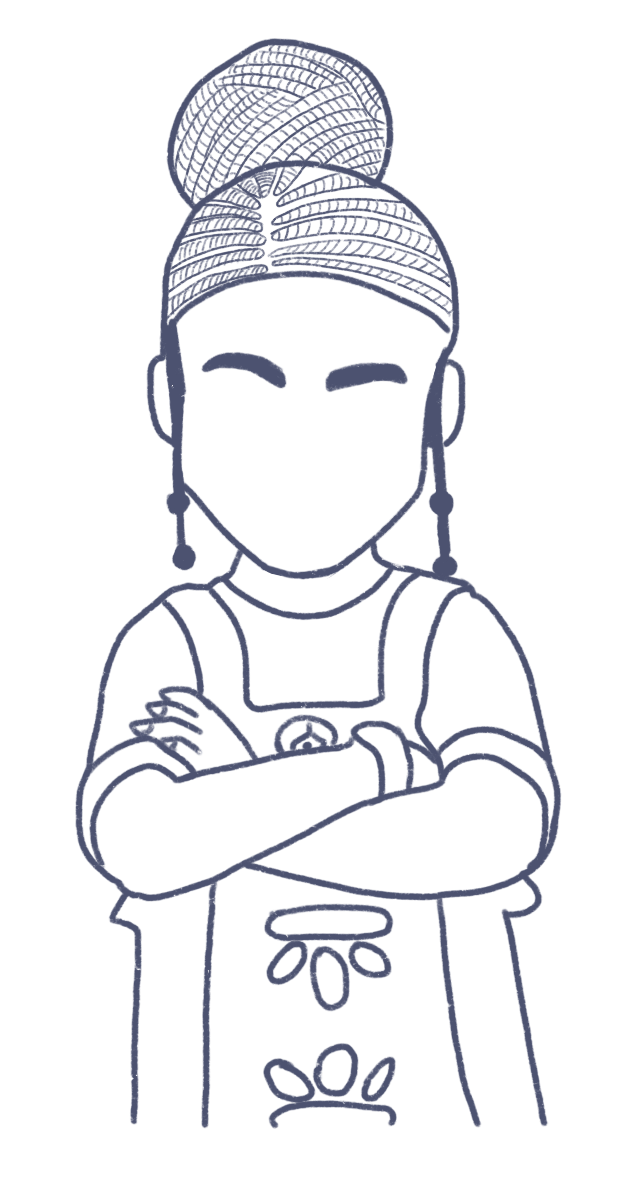
The story mainly follows Tola. She’s an adorable, kind, curious, and endlessly positive little girl who, in her curiosity, discovers a bit more about the world outside her life-long protective bubble.
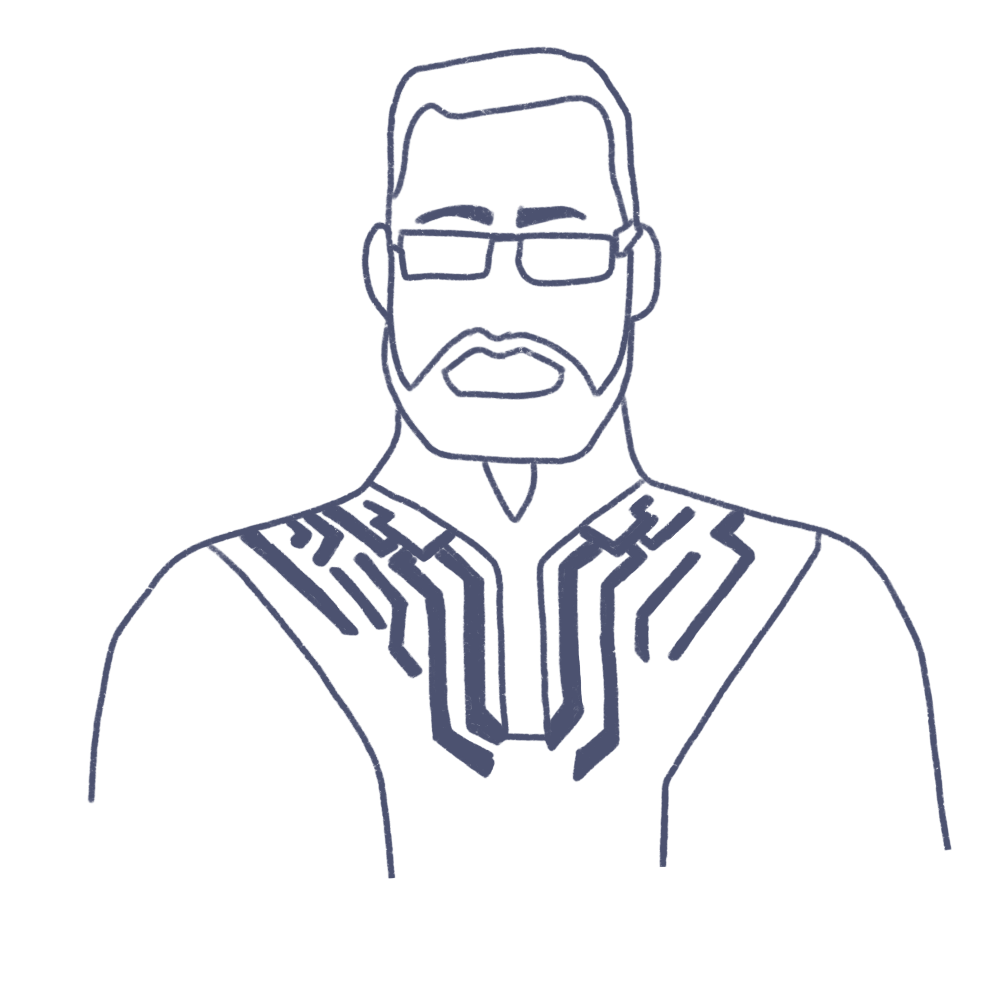
Her father, Tunde, is incredibly intelligent and hardworking but negligent as a father to Tola. His strive for a comfortable life for his daughter has made him disconnected from the very person it is all for.
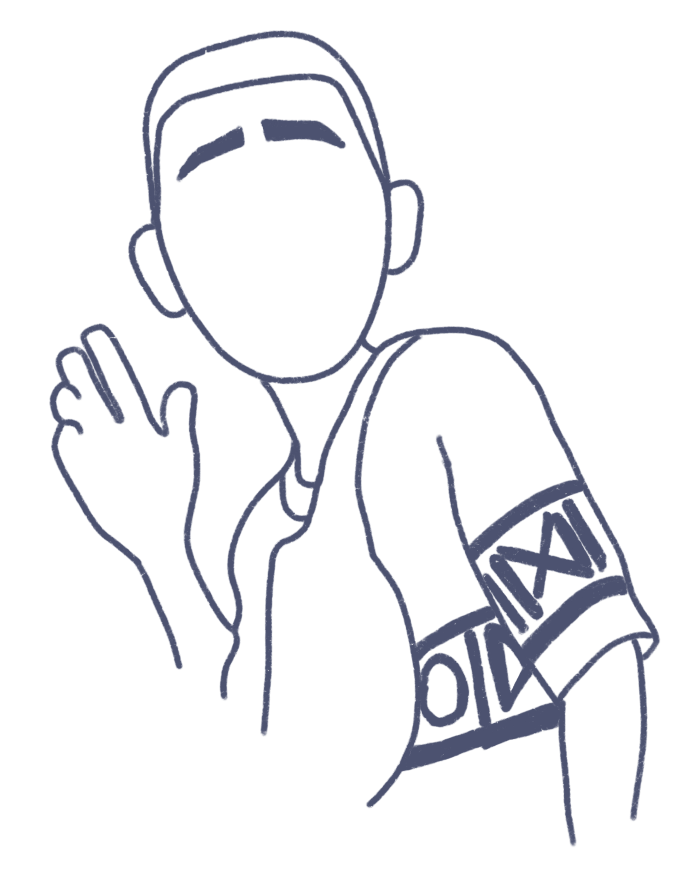
Kole is Tola’s best (and only) friend. His is the story of many Nigerian children, whom life circumstances provide very limited paths for regardless of what they are capable of or want for themselves. He’s very smart, meek, wise for his age, and always well-meaning.
Bode is our villain, a genuinely quite scary one to be honest. He’s angry, fed up, and in his own very very misguided way is fighting to bring ‘fairness’ to a world that hasn’t shown him any.
I saw a lot of my mom in Tunde. And I saw a lot of me in both Kole and Tunde. Every character holds some level of complexity to them. It was a good idea to have each episode start through the lens of the different main characters. It adds just the amount of depth that is needed. Again, for a kids show, I’m not expecting a character study. For what it is, it’s executed pretty well in my opinion.
Cultural Accuracy
There are two different types of representation in media: representation made for the represented and representation made for everyone else. One of them is often watered-down, spoon-fed versions of entire cultures for easy digestion by the “other” and the former can sometimes alienate much of everyone else from appreciating what is being offered. I’m not a film maker but I appreciate that it can be quite tricky to find a balance between the two. I think Iwájú managed it quite well, especially for a kids show. But I am a Yoruba girl born to two Yoruba parents in the heart of Lagos so I recognize that I can’t be a good judge for how well this balance was executed. I’m very curious to hear from people at varying degrees of disconnect from the characters in the show.
If you’re from Lagos but Igbo, did you feel a slight difference from your reality? What if you’re Yoruba but didn’t grow up in Lagos? What if you had never even heard of Nigeria as a country before? I’d like to speak to more people about this, comment if you have watched the show and let’s talk.
I grew up in Lagos, Nigeria. For the first 15 years of my life, it was the center of my universe. I grew up on the mainland, in a relatively middle-class household if such a thing exists in Nigeria–I argue that it really doesn’t but that’s a discussion for another day. My point is that although we were comfortable, I was very much exposed to Lagos in all its many forms on a daily basis. From the constant cautioning on what square meter of our street was okay to wander alone, to the amount of safety precautions taken on a day-to-day that didn’t even register as extensive to me until leaving that environment. And yes, we all viewed The Islanders the way Iwájú shows.
It’s tempting to want to portray Lagos in a palatable way to the world. Nigeria, and Africa in general, does not have very good PR, apart from maybe Afrobeats and Jollof wars, which is not all that we are. I’d be surprised if people even knew that Africans have iPhones. So I understand the allure of portraying the best part of ourselves. But that would not have been honest. And so I really appreciated the conscious effort to not romanticize Lagos in Iwájú. It’s a real place with real people, with its fair share of beauties and uglies. Lagos has a lot of problems and Lord knows that Nigeria as a whole has so many issues that we don’t have the time or word count to get into right now. But that doesn’t take away from the charms.
“Iwájú: Episode 3, Disney+ (2024)”
There is an innate and often baffling amount of joy in the face of unimaginable adversity, that seems to radiate from the ground itself. It has such a captivating energy. It’s a melting pot of so many languages, so many cultures, so many personalities. There’s so much chaos and so much going on, and yet there’s some sort of harmony to it all somehow. It all works (apart from the times it doesn’t). The scene of Tola and Kole in the market and was one of my favorites in the entire show. As a chronically anxious girlie, the sensory overload you get from going to the market with your mom is insane and yet somehow you almost miss the overwhelm of it all once you’re out of it (until you have to go back again haha).

Why This Means So Much
I’ve always been a reader, since the moment I could comprehend written word. To anyone that knows me at any capacity, I am the book girl. My reading tastes have changed and varied widely from childhood to today but one of my favorite genres that has taken many different forms but remained the same at a core level is Fantasy. I adore reading about magic, I love going on wild out-of-this-universe adventures, I love to be completely swept away from the here-and-now and be taken to places my mind can’t even fathom. And as a young reader, the kind of books available to me at the time pertaining to this were your typical Percy Jackson, etc.
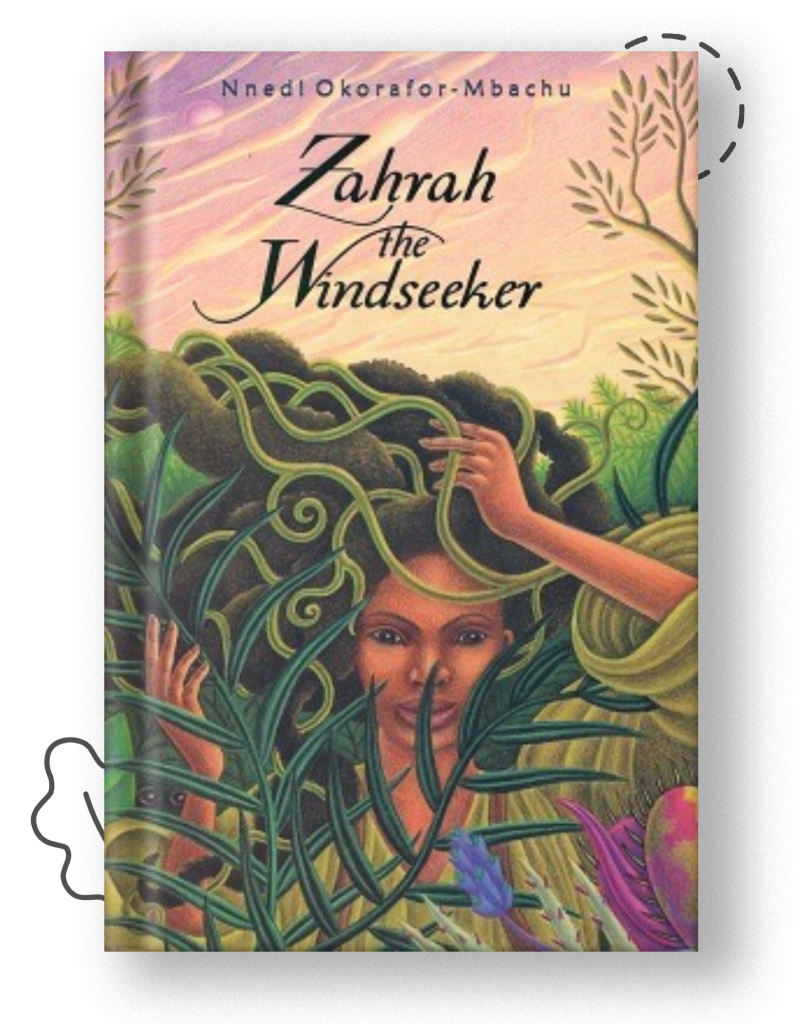
Until one day, when my aunt gifted me a book; Zahrah The Windseeker by Nnedi Okorafor. Until that day, my imagination had not even considered that there could be people like me in these type of books, that there could be references to my culture, to my day-to-day, in the books I was reading. I had encountered Nigerian fiction of course, but not in a fun fantasy way, not in a lighthearted imaginative way. I devoured Zahrah The Windseeker in 4 hours all in one sitting. I remember exactly how long it took me because my dad warned me to pace myself and savor it otherwise I would be out of books to read and back to being bored again (He was right). I barely remember many of the details of Zahrah The Windseeker but it wasn’t about the story itself; which was great, don’t get me wrong. It was about the world that the book opened up to me.
And that’s why I loved seeing Iwájú so much. I imagine kids like my 6-year-old nephew, used to watching animated Disney shows but never imagining that it could come in a form so familiar to them, never imagining they could see themselves mirrored back on the screen. I envision them scrolling through Disney+ and amongst the sea of shows they have become accustomed to being familiar with, seeing those same outfits that they are often forced into for family gatherings and hearing characters speaking in accents that their family do. I imagine the shock and excitement.
I recognize that to someone who has always seen themselves on screen in any capacity, it is hard to understand why seeing a Disney character eat puff-puff could make one so emotional. Those that get it, get it.

Criticism
Nothing is above being critiqued and Iwájú is no exception. There’s some pacing issues, the accents are a bit hm sometimes, the tone shifts were not always very well balanced, and I genuinely found Bode terrifying even as the adult that I am and so I worry how kids will sleep at night especially surrounding a scary enough topic like kidnapping. But overall, it’s a kids show and I’m inclined to give it more grace because ultimately, the most important thing is whether it was an enjoyable watch and whether or not it provided any value, both of which it did. For its first production of this scale, Kugali Media has accomplished something incredibly impressive.
I imagine that there will be some criticism for why it matters so much that Disney collaborated with an African production company to make an animated movie like Iwájú. Nigerian creatives have been creating incredible work in-house and for ourselves for decades. Is it a big deal now that it has that Disney stamp on it? Especially given Disney+ is not even available in Nigeria yet (mind-bloggling). These are valid critics and I think they shouldn’t be dismissed but I think it is equally important to remember where we are coming from and recognize Iwájú for what it is: baby steps. It isn’t perfect. And it’s not supposed to be. It’s the beginning. It marks a start to what is possible that wasn’t considered so before. I think it’s irresponsible to dismiss the impact it will have on the kids being represented at such a scale for the first time in their lives, the exposure it brings to a culture we have always known to be beautiful but the rest of the world now gets to appreciate, and what it means for current and aspiring Nigerian and African creatives moving forward.
It’s like Cultural Consultant on Iwájú and co-founder of Kugali Media, Toluwalakin Olowofoyeku, said in the documentary about the making of Iwájú (which you must give a watch), “You don’t think ‘I’m going to make a video game or a movie with Disney’. Most people from Africa and Nigeria in particular do not dream that way because it just doesn’t seem realistic to them…I hope that now I can help other people to realize their dreams don’t turn to dust“.
Yes, there is a part of me that hates how validated I feel seeing Iwájú on Disney+ but a larger part of me is just proud and excited. I’m once again that preteen on the couch reading Zahrah The Windseeker with my heart full and my world opened up farther than I thought possible.

Final Thoughts
It’s not perfect. But it exists. And it’s very good. Whether or not you’re Nigerian, I think this show will serve you in one way or another. Go watch the show, regardless of your age. If you don’t totally get every slang and every reference, that’s okay. Maybe google it if you’d like some understanding, maybe just appreciate it without. Either way, support or else. (Jk but also kinda not). And if Tolu, Hamid, or Ziki from Kugali Media ever see this, I just want to say thank you.
If you couldn’t tell from how lengthy this is, I have a tendency to go on and on. So let’s chat! Have you seen Iwájú? Did you like it? If you haven’t, have I convinced you to? Let me know in the comments.
[It shouldn’t have to be said but in case it does: this is all my opinion, not law. Please treat it as such]
 Haliyah
Leave a comment